Level: intermediate students
Form: 2nd form at secondary school
1-hour lesson
grammar focus: simple future.
Vocabulary focus: Vocabulary related to festivals.
Festivals Around the World
Activation 10’
The T will divide the class into groups of 4. She will give each of the groups a different picture about a
very well known festival that is celebrated around the world. Students will have to write a short description of it using FAKEBOOK (a webpage students have been using since the beginning of the year to post interesting things and make comments on their classmates´ ideas.) Once they have all posted, students are going to look at their classmates´ contributions and they are going to make a comment saying what festival they think it is and why and if they think they could have included any other important information about it ( like any specific acitivity they do or the country where it is celebrated, etc.)
very well known festival that is celebrated around the world. Students will have to write a short description of it using FAKEBOOK (a webpage students have been using since the beginning of the year to post interesting things and make comments on their classmates´ ideas.) Once they have all posted, students are going to look at their classmates´ contributions and they are going to make a comment saying what festival they think it is and why and if they think they could have included any other important information about it ( like any specific acitivity they do or the country where it is celebrated, etc.)
THE USE OF FAKEBOOK:

To justify the use of technology in this activity, I will resort to the following theoretical frameworks:
- The main focus of the Bloom´s Digital Taxonomy (2008) is on how different tools can act as vehicles for transforming students thinkig at different levels in a digital environment. This theoretical framework helps teachers plan their lessons going gradually from one level to another one. In this particular case, through the use of fakebook the teacher is making students use higher order thinking skills that are "analyse" and "create". Analysing is a level in which students learn to process data, dividing it into parts and determining the relationships between these parts and the overal purpose of the project. Creating is the final level of the Bloom´s Digital Taxonomy and it is concerned with taking various elements and creating a new, coherent product. In this activity students have to use their prior knowledge on any of the festivals presented in order to analyse them (by thinking about the most important information they know about it) to write a short description that will help their classmates guess the festival.

- According to the SAMR model by Ruben Puentedura, The integration of technology into the classroom can be seen as a ladder, in which the first two steps technology can be seen as a mere enhancement of the activities and the last two steps transform those activities. The first step is is substitution, the second one augmentation, the third one modification and the last one redefinition. This activity is a clear example of how technology is integrated at a modification level. Students could definitely write that short description without the use of technology but what they cannot do without technology is commenting and having access to all of their classmates´contributions at the same time. So, we can say that this activity would not be conceivable without technology.

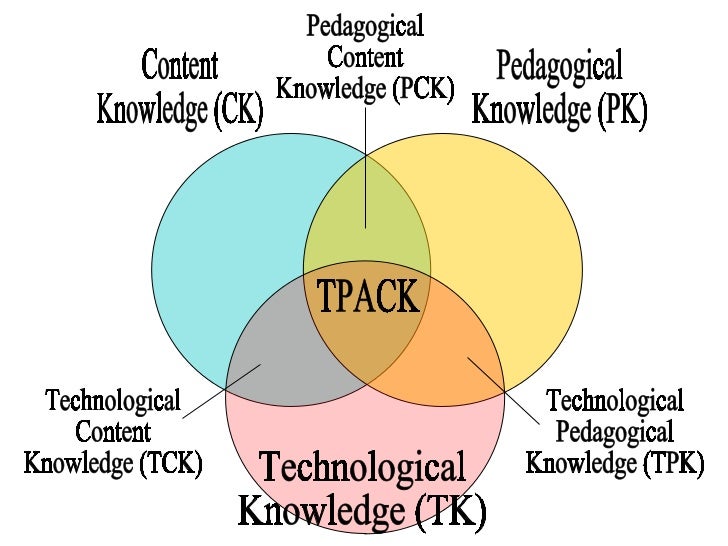
- The TPACK approach, which a model that has been developed by Mishra and Kohlerin 2006, outlines how content and pedagogy must be the foundation for an effective integration of technology in the classroom. Through this activity, it can be seen that technology is perfectly integrated within a content and how the teachers intends to get to know students´prior knowledge and prepare them for what will come next. Content, predagogy and thechnology are clearly and successfully integrated.
Students will be asked to work on a text with four very well known festivals: Carnival, St. Patrick’s Day , Holi and Glastonbury.
(the text is an addapted version from the following webpage: GREAT FESTIVALS OF THE WORLD

First, the teacher is going to ask them to work with the title and the pictures and make some predictions on what the text could be about. Then, the students are going to read the text for the first time to check if those predictions were ok.
task 2 - 10`:
The teacher will guive the studets a group activity to check comprehention.
Group work. The T will write the name of each festival on the board and place some sentences on the desk for one member of each group to come to the front and take one of those phrases. Then that student will go back to their group and discuss with the rest of the members which festival that phrase refers to.Once they have finished, the same student will stick the sentence under the corresponding festival. The group which gets more correct answers will win the competition.
Carnival St. Patrick’s Day Holi Glastonbury
Sentences:
- People are usually dressed in green and they get together in open space.
- It is one of the most well - known festivals around the world which takes place in Latin America.
- It is celebrated in different parts of the world and its duration may vary according to the place.
- This festival involves not only music but also people sharing their interests and having a good time for long hours.
- This celebration represents the clash between two great forces.
Task 3 - 35`:
Now, in small groups, students are going to use their computers and they are going to choose a festival that they like from a different part of the world or from their own country. The teacher will ask them to do thorough research on that festiva and once they have collected the appropriate information they are going to create a video using POWTOON to advertise it. Once they have finished, we are going to share the videos and we are going to vote for the most original one.

THE USE OF POWTOON:
To justify the use of technology in his activity, I will resort to the followin theoretical frameworks
- Taking the Bloom´s digital taxonomy into account, students are going to use a higher order thinking skill which is to "create". They are going to use all the information they collected while doing reaserch to create a video. The activity is perfectly placed at the end of the lesson as the teacher went gradually from lower level thinking skills to the highest level.
- The use of technology in this activity can also be supported from Ruben Puentedura´s SAMRA Model. The SAMRA model helps the teacher reflect upon how we are using technology in the classroom. This activity is a clear example of how technology is integrated at a redefinition level in which students are asked to create something new that would be inconceivable without technology. Students cannot create a video with images, texts and audio without the use of an app or a webpage that allows them to create it.
- PLANIED was developed by the Ministry of Education and Sports in 2015. It aims at promoting digital literacy in students´every day life. This is why teachers should reflect upon the necessary skills they should teach their students to be able to use different digital tools. Taking into account the dimentions that this approach proposes, it can be said that in this lesson students need to be creative, communicate and collaborate in order to do the video. They also have to be responsible and supportive with their classmates as they are working cooperatively. At this stage of the lesson, the teacher is only a mediator and the learners are more autonomous and they turn into the buiders of their own knowledge as they have to do research and select the information that they consider important in order to create the video. Also, critical thinking is involved in this activity as students are transforming and addapting the material they are using to create a video that advertises that festival.

If you don´t know the two thechnological tools proposed in this lesson plan, you may want to go to the following post to learn how to use them.
References:
Ripani, F. (2016). Competencias de Educación Digital. Ministerio de Educación y Deportes. Retrieved in July 2017 from http://www.bnm.me.gov.ar/giga1/documentos/EL005452.pdf
Puentedura, R. (2006). Transformation, Technology, and Education. Retrieved in October 2019 from
Sneed, O. (2016). Integrating Technology with Bloom's Taxonomy. Retrieved in October 2019, from https://teachonline.asu.edu/2016/05/integrating-technology-blooms-taxonomy/.
Rodgers, D. (2008, June 19). The TPACK Framework Explained ( with Classroom Examples). Retrieved from https://www.schoology.com/blog/tpack-framework-explained.
http://www.hippasus.com/rrpweblog/archives/2014/06/29/LearningTechnologySAMRMdel.pdf.
Rodgers, D. (2008, June 19). The TPACK Framework Explained ( with Classroom Examples). Retrieved from https://www.schoology.com/blog/tpack-framework-explained.


No hay comentarios.:
Publicar un comentario